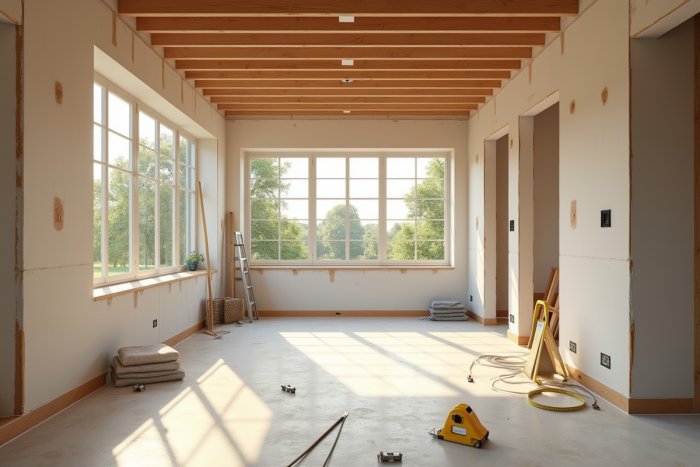
A simple tape measure can change the game and transform the value of a property. We believe we own a generous living room, until the day when a few square meters evaporate due to a clumsy conversion. The result: an unpleasant surprise hits at the time of resale — or when the insurer raises a skeptical eyebrow.
With sales and purchases, the figures fluctuate between square meters, ares, and hectares. Behind these units lie misunderstandings that can be costly, sometimes even leading to disputes that drag on in court. Mastering the art of surface conversions is not trivial: it has become as instinctive as locking your door with a double bolt.
Surface conversions: why these concepts are essential for property owners
The surface of a property is not limited to the cold line of a notarial deed. It shapes the daily life of the owner, influences their rights, duties, weighs in the balance of rents, charges, and even taxation. Between living area, Carrez law surface, or floor area, one can quickly get lost, especially when legal vocabulary gets involved and criteria intertwine.
The Construction and Housing Code distinguishes, for example, between the living area (used for rental contracts according to the Boutin law) and the Carrez law surface (required during a sale in co-ownership). Each is based on a unique calculation. These definitions intersect, but they never completely overlap. Take an unfinished attic, a veranda, or loft spaces: their presence or absence in the calculation can change the game, and thus the displayed price.
Unit of measurement: the square meter reigns supreme, but it shares the spotlight with the are, the hectare, or the centiare — hardly intuitive, especially for land, vineyards, or large properties. For example, do you really know what 1 hectare in m² represents? The answer, crucial for any notarial act, is deciphered in the article “How many square meters is one hectare exactly? – My Real Estate Tips”.
- Usable area: it includes annexes — cellar, balcony, pantry — a data scrutinized by investors.
- Corrected area: it adjusts the surfaces according to their actual use, especially in co-ownership.
- Gross rental area (SUBL): an essential reference for professional or commercial premises.
Knowing how to handle these conversions, juggling with definitions, helps avoid unpleasant surprises, cascading disputes, and optimize the management of one’s real estate assets.

How to avoid common mistakes when calculating and converting surfaces
Taking the surface calculation seriously: this is the foundation of a smooth transaction. Confusions between living area and Carrez law surface are the source of many disputes. The former excludes cellars, unfinished attics, and garages; the latter only considers closed, covered areas with a height greater than 1.80 meters, in co-ownership only.
To avoid the fatal error, entrust the measurement to a property surveyor or a certified surveyor. These specialists know the subtleties of the Construction and Housing Code inside out: they exclude load-bearing walls, steps, door and window frames, and accurately distinguish between actual surface and usable surface. Misconverting square meters into ares or hectares can lead to significant discrepancies on a sales deed, especially for a large plot.
- Check the ceiling height: only areas exceeding 1.80 meters are taken into account by the Carrez law.
- Identify the spaces to exclude: cellars, parking spaces, balconies, and common areas do not count in most calculations.
- Always keep the Boutin law diagnosis and the Carrez law diagnosis handy during a rental or sale.
An incorrect surface on a lease or a sales deed? It’s the perfect ground for a downward renegotiation, or even a complete cancellation of the transaction. It’s better to compare the professional’s measurements with the co-ownership documents. Precision and rigor protect both the landlord and the tenant.
In an age where every square meter counts, the accuracy of surface conversions can turn a simple estimate into a true asset lever. Who would have thought that a tape measure could weigh so heavily in the balance?