
Medical follow-up and medical monitoring rely on distinct logics that clinical practice and health law clearly separate. Confusing the two leads to errors in orientation, reimbursement, and sometimes liability. Understanding the difference between follow-up and monitoring allows for the right approach in each health situation.
Regulatory framework for medical follow-up and monitoring after 2022
Decree No. 2022-1767 of December 30, 2022, formalized the distinction between regulated telemonitoring and consumer applications. Before this text, the boundary remained unclear: a patient using a connected blood pressure monitor might believe they were receiving medical monitoring in the regulatory sense, while they were actually engaging in self-monitoring without clinical oversight.
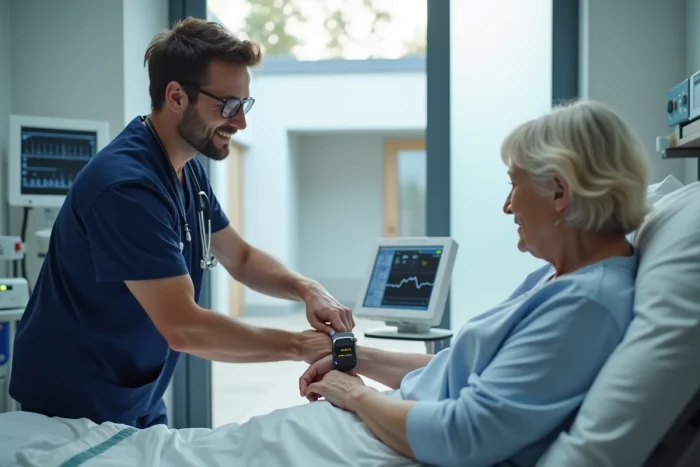
Telemonitoring, as defined by this decree, involves a validated medical device, a referring healthcare professional who analyzes the transmitted data, and a reaction protocol in case of an alert. Remote follow-up via a wellness app, even if connected, does not meet any of these criteria.
To learn everything about medical monitoring in the strict sense, we recommend systematically checking if the device used bears the CE marking as a medical device and if a healthcare professional is contractually involved in data analysis.
Epidemiological monitoring and individual clinical follow-up: two opposing purposes
The most common confusion revolves around the word “monitoring” itself. In public health, epidemiological monitoring refers to the collection of population data to detect health threats. Public Health France and the ECDC reaffirmed this definition in their frameworks for monitoring respiratory infections, updated after the COVID crisis.
Individual clinical follow-up operates on an inverse logic. It starts with an identified patient, with a diagnosis made or a diagnostic hypothesis, and aims to adapt treatment or detect a recurrence. The attending physician who schedules a follow-up consultation three months after prescribing an antihypertensive is conducting follow-up. The ARS compiling flu cases in a region is conducting monitoring.
Why this distinction changes the caregiver’s responsibility
In population monitoring, responsibility is collective and institutional. The data is anonymized or pseudonymized. In individual follow-up, the responsibility falls on the identified prescriber, who must document each decision in the patient’s medical record.
A doctor interpreting data from a connected glucometer within the framework of telemonitoring assumes professional responsibility for each untreated alert. An epidemiologist analyzing diabetes prevalence curves does not have this nominative obligation.
Connected health devices: validated follow-up or non-regulatory monitoring
Connected medical devices (medical ECG watches, connected glucometers, validated blood pressure monitors) are now integrated into structured clinical follow-up protocols. Their regulatory status radically distinguishes them from wellness products.
- A connected glucometer prescribed by an endocrinologist, with automatic transmission of blood sugar levels to telemonitoring software, constitutes regulated medical follow-up as per the 2022 decree
- A consumer-grade connected watch measuring heart rate without clinical validation falls under informal self-monitoring, with no opposable medical value
- A certified medical device connected blood pressure monitor, used without a telemonitoring protocol or referring professional, remains an unregulated personal follow-up tool
The nuance lies in the data circuit. Without a healthcare professional analyzing and reacting, there is no medical monitoring, regardless of the technological level of the sensor.
Criteria for qualifying a connected device in the care pathway
In practice, we observe that three criteria determine the status of the device:
- The CE marking as a medical device (not just as an electronic product)
- The existence of a validated telemonitoring protocol, with a designated healthcare professional to receive and interpret alerts
- The traceability of data in the patient’s medical record, allowing for a link between the measurement and clinical decision
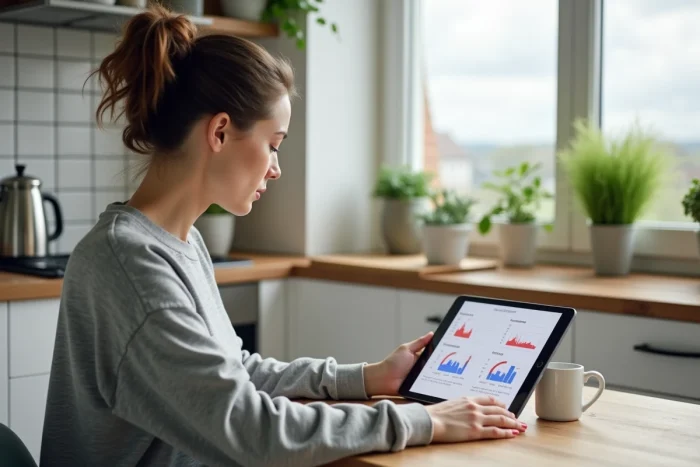
Without these three elements combined, the connected device remains a tool for personal information. It can be useful, but it does not create an obligation for medical reaction.
Enhanced follow-up in occupational health: a distinct category
Enhanced individual follow-up (EIF) in occupational medicine illustrates the specificity of the vocabulary. It is neither population monitoring nor classic follow-up. EIF concerns employees exposed to particular risks (asbestos, lead, carcinogenic agents, night work) and requires more frequent medical visits with the occupational physician.
The periodicity and content of these visits are regulated, which brings EIF closer to a form of regulatory monitoring applied to the individual. The occupational physician does not merely accompany: they verify fitness and can issue an unfitness notice with direct contractual consequences.
This hybrid category shows that the boundary between follow-up and monitoring is not binary. It depends on the legal framework, the purpose (to protect the individual or the collective), and the decision-making power of the involved professional.
The distinction between medical follow-up and monitoring is not just a semantic debate. It conditions the level of responsibility of the caregiver, the reimbursement of acts, and the legal value of the collected data. As connected devices multiply, checking which category each tool falls into remains the most protective reflex for both the patient and the practitioner.