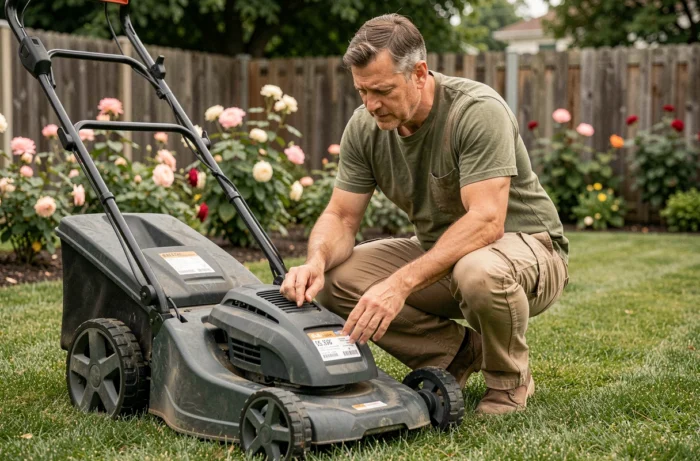
An electric mower refers to any mowing device powered by electricity, whether it is plugged into the mains via a cable or powered by a rechargeable battery. The purchase price varies widely depending on the technology, cutting width, and battery capacity. Understanding what drives up the cost helps avoid paying for unnecessary features, or worse, under-sizing your device.
Repairability Index: The Price Criterion That Comparisons Overlook
Even before comparing labels in-store, one indicator deserves your attention. The repairability index, made mandatory by the AGEC law, assesses the technical documentation, ease of disassembly, availability, and price of spare parts. It directly applies to electric mowers.
Two models priced the same can incur very different costs over five or six years. A device with easily replaceable blades, motor, or collection bag will be cheaper to use than a compact model that is nearly impossible to repair. The DGCCRF monitors this system, and the score (out of 10) must be displayed in-store as well as online.
In practical terms, prioritizing a high score means checking the price of an electric mower on tondeuse-electrique.net while considering the total cost of ownership, not just the checkout price. A repairable device also protects your budget against planned obsolescence.
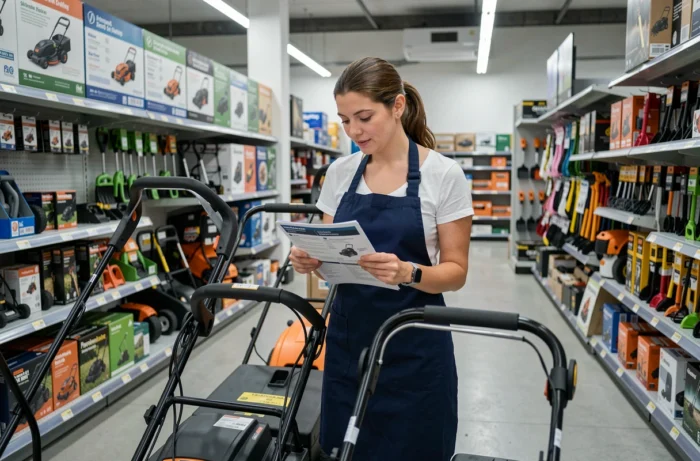
Wired or Battery Mower: Price Differences and Use Cases
The fundamental distinction in the market remains between wired mowers and battery mowers. The wired option is significantly cheaper to purchase. Its downside: a limited range dictated by the length of the extension cord, and a risk of tripping or accidentally cutting the cable.
The battery mower eliminates this constraint. The extra cost is due to the battery pack itself, often lithium-ion, and the charger provided or sold separately. The higher the battery capacity (measured in amp-hours), the higher the price.
Advertised Runtime vs. Actual Runtime
Manufacturers communicate a runtime measured under standardized conditions. In tall, wet grass or during intensive mowing, the actual runtime can decrease significantly. Before purchasing, think in terms of the actual area of your lawn rather than the minutes displayed on the product sheet.
For modest-sized gardens, a single charge is usually sufficient. Beyond that, plan for either a high-capacity model or a second battery, which increases the initial budget.
Cutting Width and Motor Power: Their Direct Impact on Price
The cutting width (measured in centimeters) determines the strip of grass cut with each pass. The larger it is, the fewer trips you make back and forth, but the heavier, bulkier, and more expensive the device becomes.
- Compact models with a reduced width are suitable for small areas and remain in the lower price range of the market.
- Intermediate-width mowers offer a good compromise for the majority of residential gardens without blowing the budget.
- Wide-cut models target larger areas and approach the price of entry-level gas mowers.
The power of the motor follows the same logic. A more powerful motor handles thick grass and sloped terrain better but consumes more energy (and thus more battery on cordless models).
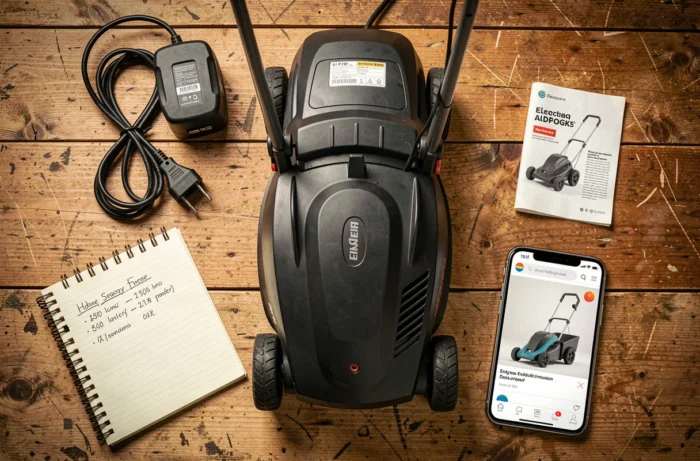
Features That Drive Up the Price: Mulching, Bag, and Traction
Some options significantly impact the final bill without always being justified.
Mulching (finely shredding the cut grass, which is then returned directly to the lawn) avoids emptying a bag and nourishes the grass. Mowers that offer this feature are more expensive but eliminate the need to buy bags and reduce maintenance time. For a lawn that is mowed regularly, mulching is a worthwhile investment.
The collection bag, its volume, and the quality of its ejection system also influence the price. A bag that is too small requires frequent emptying. A rigid bag lasts longer than a soft one.
Traction or Manual Push
Self-propelled models (the motor drives the wheels) make mowing on hilly terrain or large areas easier. This feature adds a notable cost. On flat and modest-sized terrain, a push mower is more than sufficient and allows for savings.
Noise, Local Regulations, and Battery Recycling
The noise level of an electric mower is significantly lower than that of a gas model. This is not just a comfort issue: municipal or prefectural orders regulate the hours of use for powered gardening equipment. Noise deemed excessive can constitute a nuisance to neighbors, even outside prohibited hours. Check your municipality’s rules before purchasing.
Also, consider the end-of-life of the device. Used batteries should not be thrown away with household waste. They must be dropped off at a specific collection point (recycling center, participating store). European battery regulations impose recycling obligations on manufacturers, which may ultimately favor brands engaged in structured take-back programs.
- Check your town hall’s order for authorized mowing times.
- Verify that the manufacturer offers a battery take-back program.
- Compare the noise level (in decibels) between several models if you mow early in the morning or on weekends.
The actual cost of an electric mower exceeds the price displayed on the shelf. Repairability, runtime in real conditions, cutting options, and local regulatory constraints weigh as much as the initial price. Choosing a model suited to the size and terrain of your lawn, with a high repairability index, remains the most reliable method to control expenses over several mowing seasons.