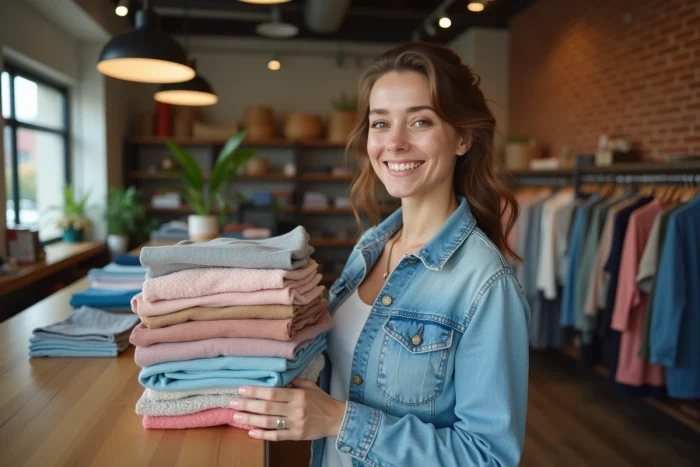
Contrary to what many imagine, at Ding Fring, there is no question of direct buyback from individuals. All second-hand clothing offered for sale comes exclusively from donations. This rule applies without exception across the entire network, even though some other second-hand stores play the consignment or immediate buyback card. Thanks to the solid organization of the Le Relais group, prices remain among the most attractive in the sector. Here, logistics makes all the difference.
Every item placed on the shelves undergoes meticulous sorting based on specific criteria: quality, condition, season. The result: a continuously renewing stock. Customers thus find a sharp selection at unbeatable prices, without compromising on quality.
Why the buyback of second-hand clothes is attracting more and more people
Second-hand has left the margins of the market. In France, solidarity shops are attracting more and more visitors. Giving a chance to your clothes, supporting a solidarity economy, reducing pressure on the environment: the model attracts for good reasons. Structured networks orchestrate large-scale collection, transforming what was lying dormant in closets into a valuable resource.
The collection is no longer a makeshift associative effort. It is now part of a territorial dynamic, where each donation point becomes a relay for job creation. Through the enhancement of textiles, Ding Fring offers a model where professional integration and responsible consumption go hand in hand. The shops, often located in lively neighborhoods, provide access to unique pieces for all budgets.
This success is based on a well-oiled virtuous circle. Collected clothing is sorted, valued, and then resold, financing integration pathways for people distanced from employment. The approach appeals to a broad audience: young people, families, seniors, as well as treasure hunters and enthusiasts in search of finds. How Ding Fring buys back clothes is raising more and more questions, proving that the model engages and prompts inquiries about its social impacts.
Each deposit, each purchase, is part of a collective project. The shop becomes more than just a place of commerce: it embodies another way of thinking about fashion, driven by the circular economy and a tangible commitment to solidarity.
How buyback works at Ding Fring: steps, tips, and good deals
Stepping into Ding Fring means discovering a well-established system focused on collection and textile valuation. It all starts with the drop-off of bags in-store. Clothing, accessories, or household linen are taken care of by a attentive team trained to assess the condition, season, and potential of each item.
The sorting, rigorous, takes place on-site or in dedicated workshops. The selected pieces join the shelves of the second-hand clothing shop. Those that are not suitable are directed to other textile valuation channels, thus limiting waste. This circuit guarantees a second life for textiles and promotes job creation through the integration relay system.
Some tips to optimize your drop-off
Here are a few points to check before bringing your clothes, to ensure that the donation is effective and beneficial:
- Bring clean clothes, without tears or stains.
- Do a preliminary sort: isolate seasonal items, group accessories and shoes by pair.
- For household linen, gather complete sets (bedding, tablecloths, curtains).
The collection and valuation goes well beyond the store’s doors. The volumes processed each year testify to a collective commitment, where each donation contributes to professional integration and energizes the second-hand clothing market. At Ding Fring, the shop becomes a testing ground for the circular economy, where each piece has its place, its story, its second chance.
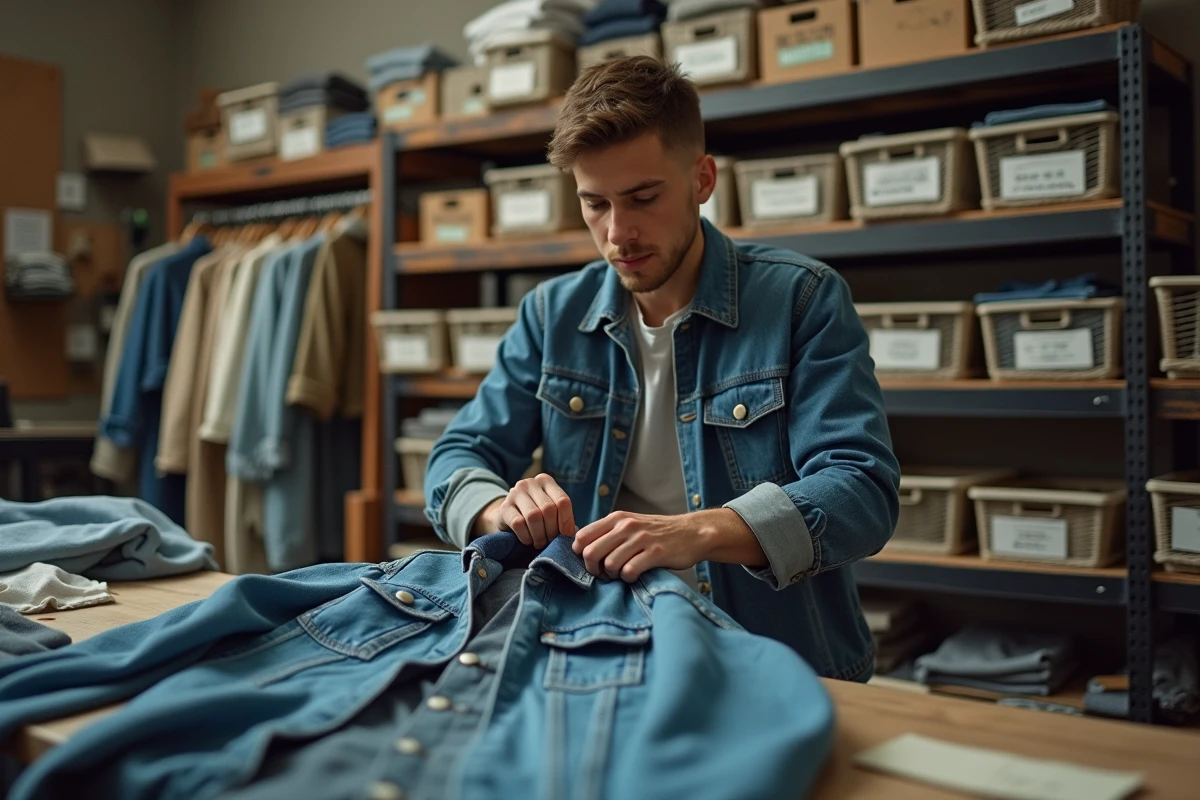
What to expect in-store: prices, selection, and unique atmosphere at Ding Fring
Behind the facade of a Ding Fring shop, the atmosphere contrasts with that of a traditional chain. Here, everyone moves through a space where the selection ranges from timeless basics to unexpected finds, for the whole family. The racks overflow with second-hand clothing and accessories carefully chosen: simple jeans, elegant jackets, household linen, shoes waiting for a new life.
Prices are adjusted according to condition, rarity, or season. The offer remains accessible, sometimes almost symbolic, without ever compromising on quality. This model makes wardrobe renewal possible, without sacrificing style or ethics. The tags remind customers of the solidarity aspect of the place: each purchase supports the creation of professional integration jobs.
The atmosphere is marked by friendliness. The team welcomes, advises, shares the story of a garment or the origin of a remarkable fabric. A visit to Ding Fring goes well beyond a purchase: it is a true moment of immersion in circular fashion, where each piece has already lived and is ready to embark on a new adventure. Regulars mingle with the curious in a shop where people browse, compare, and discuss, far removed from the hurried pace of large retail stores.
By stepping through the door, each customer becomes part of a collective momentum: supporting integration, giving a second life to textiles, and advocating for a more responsible way of consuming. Here, the experience far exceeds a simple transaction. It is rooted in a social and environmental approach, driven by the generosity and commitment of an entire community.