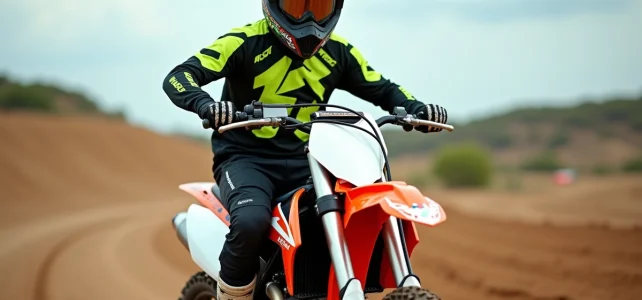
Riding on trails and asphalt with the same machine is the promise of a road-legal 125cc cross motorcycle. This type of two-wheeler combines a lightweight chassis, long-travel suspension, and equipment that meets legal requirements (lights, mirrors, turn signals). For 2025, several manufacturers are adjusting their models to meet Euro 5 standards and the tightening of technical inspections, which changes the selection criteria.
Euro 5 Standards and Technical Inspection: What Changes for 125 Cross in 2025
Before comparing the machines, it’s essential to understand the regulatory framework that shapes them. Since the transposition of directive 2014/45/EU into French law (decree of October 23, 2023), the technical inspection for motorized two-wheelers is being implemented gradually. Manufacturers are anticipating the points for re-inspection: noise level, lighting, and pollutant emissions.
At the same time, the amended European regulation 168/2013 imposes the Euro 5 standard on engines. For a road-legal 125 cross, this means a properly sized catalyst, calibrated injection, and sometimes standard ABS or combined braking. These additions slightly increase the weight of the machine but ensure its long-term compliance.
Have you noticed that some 125 cross models are priced higher than in previous years? This is largely due to these compliance updates. A machine that is compliant from the start avoids unpleasant surprises during the inspection. If you’re looking to compare the road-legal 125cc cross motorcycle models for 2025, this regulatory criterion should weigh as heavily as power or weight.
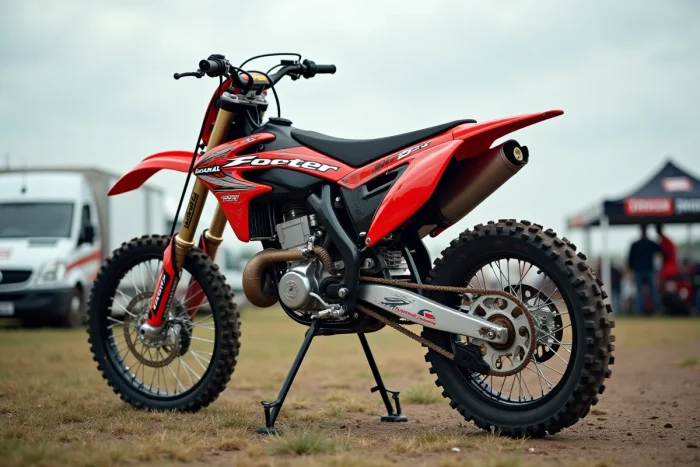
Road-Legal 125 Cross Motorcycle: Three Models to Watch Closely
Rather than providing an exhaustive list, let’s focus on three different approaches to the segment. Each manufacturer makes technical choices that guide the final use.
KTM and Its All-Terrain Platform Adapted for the Road
KTM offers a competition-derived architecture in its 125 range. The steel-chrome-molybdenum frame remains lightweight, and the WP suspension provides generous travel. The electronic injection and Euro 5 catalyst are integrated without sacrificing engine responsiveness.
The strong point: an ergonomics designed for standing riding, useful on trails. The weak point: a high seat that may hinder shorter riders when stopped in the city.
Honda and Reliability as the Main Selling Point
Honda focuses on mechanical longevity. The four-stroke single-cylinder engine of its 125 benefits from extended maintenance intervals and low fuel consumption. Combined braking replaces ABS on some versions, which reduces costs while meeting regulatory requirements.
This approach is suitable for mixed journeys: road in the morning, track on weekends. The trade-off is in the suspension, which may be less effective in pure off-road conditions compared to European competitors.
Yamaha and the Balance Between Two Worlds
Yamaha positions its road-legal 125 cross as a compromise. The two-stroke engine has been replaced by a four-stroke injection on the road versions. The finishes (dashboard, LED lighting) facilitate daily use.
The Yamaha chassis prioritizes stability on asphalt without penalizing off-road behavior. This is a relevant choice for those who primarily ride on the road with occasional outings on trails.
Concrete Selection Criteria for a Road-Legal 125 Cross in 2025
Why do some buyers regret their choice after a few months? Often because they overlooked practical criteria in favor of aesthetics or catalog price. Here are the points to check before signing.
- Compliance with Technical Inspection: Ensure that the model has approved lighting, a noise level within legal limits, and a compliant braking system. A model delivered “ready for inspection” avoids future compliance costs.
- Seat height and weight when full: a 125 cross is taller than a standard roadster. Try the machine at a stop, both feet on the ground, before buying. A few centimeters difference can change insurance in urban settings.
- Availability of spare parts: European brands (KTM, GasGas, Husqvarna) often share components among themselves. Japanese brands (Honda, Yamaha) have broader distribution networks in France. In both cases, check the average delivery time for wear parts (brake pads, chain, filters).
- Financing offers: networks like Yamaha Motor Finance and multi-brand dealerships are increasingly offering LOA or LLD plans on road-legal 125 cross motorcycles, with insurance and maintenance included. Compare the total cost over the contract duration, not just the monthly payment.
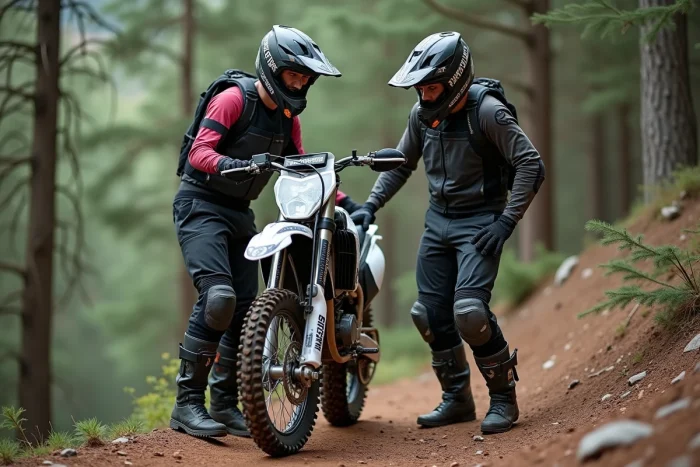
GasGas and Husqvarna: Alternatives in the 125 Cross Market
These two brands belong to the Pierer Mobility group, like KTM. They share part of the technical platform. The difference lies in positioning: GasGas targets a younger audience with slightly lower entry prices, while Husqvarna focuses on finishes and a premium image.
In practice, the engines and frames are similar. The choice comes down to aesthetics, the proximity of dealer networks, and warranty conditions. Three brands, a common technical base, but different purchasing experiences.
This pooling has a concrete advantage: spare parts are interchangeable across many components. A KTM air filter may fit a GasGas of the same model year, broadening supply options.
Mixed Use on Road and Cross: What Homologation Really Imposes
A road-legal 125 cross is not a competition 125 cross with turn signals stuck on. Road homologation requires structural modifications: side stand, compliant plate holder, quick-response brake lights, limited noise level.
These constraints slightly reduce performance in pure off-road conditions. A homologated cross loses agility on jumps but gains versatility for daily use. This is an accepted compromise, and the right choice depends on the actual distribution of your kilometers on the road versus track outings.
The 2025 market for road-legal 125 cross motorcycles is structured around regulatory compliance and versatility. The models that will best endure the years are those designed from the outset to meet technical inspection thresholds, not those hastily adapted. Before choosing, ride the machine, check the availability of after-sales service in your area, and compare costs over three years rather than just the purchase price.