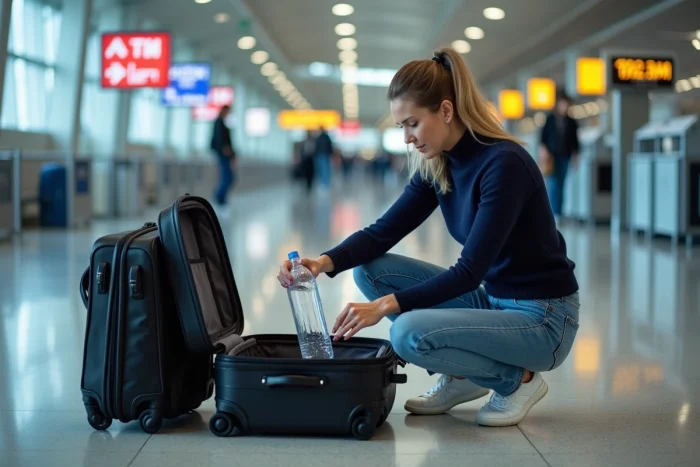
No one has ever been arrested at the airport for a bottle of water buried in their suitcase. Yet, the rumor still persists: water would be tracked in all its forms, even in the hold. The reality, much more nuanced, deserves our attention.
Aviation regulations, strict regarding carry-on baggage checks, loosen when it comes to the hold. Impossible to pass through the scanners with more than 100 ml of liquid? That’s true for the cabin. But in the hold, the logic changes completely: airlines impose no volume restrictions for water, as long as the product is neither dangerous nor flammable. In short, placing a bottle of water in checked luggage poses no particular problem.
That said, the situation can sometimes become complicated depending on the destination. Some countries or airlines tighten controls, especially towards areas subject to specific health policies. In these cases, the surveillance is less about security and more about preventing the importation of non-compliant goods.
What the regulations say about transporting liquids on a plane
It’s hard to overlook: transporting liquids on a plane is regulated down to the last milliliter. Since the 2000s, the rules have been set: each container in the cabin must not exceed 100 ml, all gathered in a transparent bag with a maximum capacity of one liter. This rule applies to water, of course, but also to juices, gels, creams, and other products with a liquid or paste-like texture. For the bottle of water in carry-on luggage, there is no ambiguity: it remains prohibited, except for medical or food-related cases justified by an official document.
On the other hand, the hold operates under a different regime. Transporting a bottle of water in the hold of a plane is not a problem, as long as the weight limits set by the airline are respected. Here, there is no specific check on the nature of the liquid, unless the product falls under a local prohibition or is a dangerous substance.
On the ground, checks mainly target risky objects. For food liquids, the freedom is much greater in the hold than in the cabin. But be careful: not everything is allowed everywhere. Outside the Schengen area, for example, some countries impose specific restrictions on the importation of water or food. Before adding a bottle to your suitcase, it’s best to consult the official recommendations of the destination country.
The logic is simple: flight safety remains the priority. While the cabin is monitored rigorously, the hold offers more flexibility. Just respect the baggage capacity and local import rules, and the bottle of water can travel without hassle.
Transporting a bottle of water in the hold: what is allowed and what to avoid
Putting a bottle of water in checked luggage is entirely possible. Airlines do not impose specific restrictions for water, whether plastic or glass, as long as the total weight of the luggage does not exceed the allowed limit. However, be careful: exceeding the allowance incurs fees, sometimes hefty ones.
A detail often overlooked: the pressure in the hold varies during the flight. A poorly sealed bottle can leak or even burst, soaking everything in the suitcase. To avoid unpleasant surprises, it’s better to opt for airtight models and avoid partially used bottles. Still water poses no difficulty, but sparkling water presents a real risk of explosion due to pressure changes.
Here are some reflexes to adopt before placing a bottle in your suitcase:
- Ensure that the bottle is perfectly sealed to avoid any leaks.
- Prefer plastic, which is sturdier and lighter than glass.
- Slip the bottle into a plastic bag to limit damage in case of an accident.
In general, the rules regarding bottles of water on planes differ little from one airline to another. However, some countries impose health checks upon arrival. For long journeys, take the time to check local guidelines to avoid unpleasant surprises. Even if water is among the permitted products, caution is still advised.

Traveling with peace of mind: practical tips for managing water during your flight
Maintaining good hydration during a flight is anything but a detail. The dry air in cabins accelerates the feeling of thirst, and organizing to drink is not always straightforward. Between regulations, access to water in the boarding area, and the choice of bottle, every step counts.
The simplest trick: invest in a reusable bottle. Insulated water bottle, foldable model, with or without a filter… there are many options. Before going through security, remember to empty it completely. Once in the boarding area, you can easily refill it at the fountains or taps provided. This gesture reduces plastic waste and avoids the need to constantly buy bottled water.
To prepare for your trip, keep a few practical tips in mind:
- Select a bottle suitable for the duration of the flight and your consumption.
- Prefer lightweight, sturdy, and perfectly leak-proof models.
- If you have a medical condition requiring water, ensure you have the necessary documentation to pass through checks without difficulty.
For long-haul flights, don’t hesitate to regularly ask the crew for water. The effects of dehydration are felt more quickly at high altitude. Taking care of your hydration also helps prevent minor health issues that can spoil a trip, all while staying within the bounds of aviation regulations. After all, crossing the clouds with peace of mind often starts with a simple gesture: managing your water bottle well.